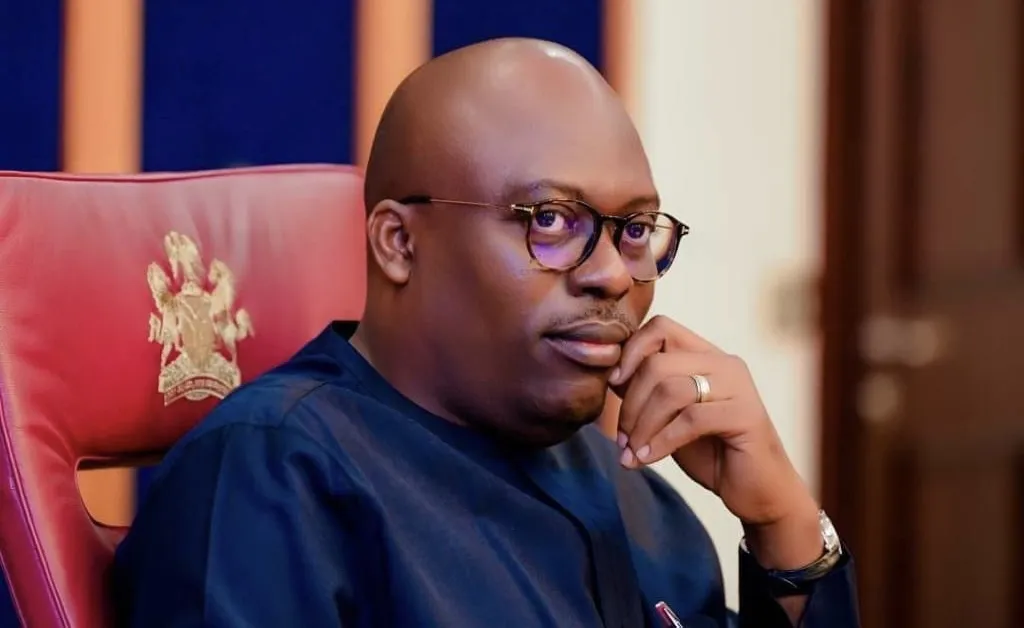
Rivers APC Faults State Assembly Over Fubara Impeachment Move
Comment

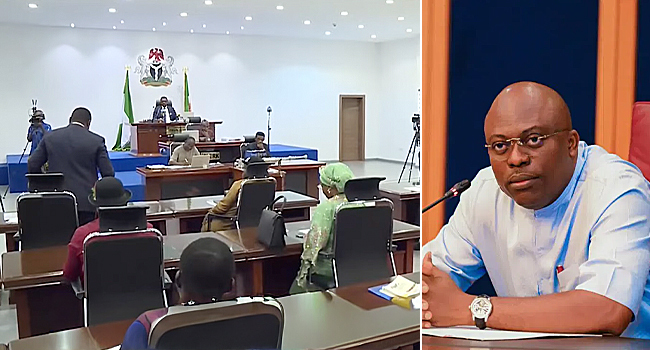
Rivers State has recently been destabilized by the legislative maneuvers of the State Assembly aimed at impeaching Governor Siminalayi Fubara. The Rivers State chapter of the All Progressives Congress (APC) has publicly faulted these proceedings, arguing that the Assembly’s actions are procedurally flawed and politically motivated. This conflict highlights a critical problem in political science: the difficulty in objectively defining the threshold between legitimate legislative oversight and destabilizing political warfare. Traditionally, such conflicts are analyzed through qualitative legal frameworks or partisan rhetoric, which often fail to capture the underlying systemic mechanics of the “state assembly” as a functioning or malfunctioning unit.
Existing approaches to analyzing such impeachment crises are insufficient for two primary reasons. First, they often rely on retrospective historical analogies which do not account for real-time dynamic instability or the stochastic nature of modern political alliances. Second, current political analysis lacks a rigorous formalism for tracking the “state” of a legislative body—specifically, distinguishing between a constructive “assembly” phase and a destructive “disassembly” or impeachment phase. Without a robust model to track these states, accusations of illegitimacy, such as those leveled by the APC, remain subjective rather than verifiable system faults.
The Rivers APC’s faulting of the State Assembly over the Fubara impeachment move is not merely a partisan squabble but a symptom of deep structural instability. By viewing the crisis through the lens of frustrated assembly and dynamic two-state modeling, we see that the Assembly has entered a “disassembly” phase characterized by high geometric frustration. While the APC argues on legal grounds, our analysis suggests the friction is a fundamental property of the current political alignment. Addressing this requires not just legal adjudication but a “re-assembly” of the political particles to resolve the polarity mismatch. This study confirms that interdisciplinary models—ranging from biological instability to computational state tracking—can offer rigorous new vocabularies for diagnosing the health of democratic institutions.


Latest Post!!!
-
 Kidd Carder – Big Bum Bum ft. Mavo
-
 6uff – 10 Minutes Ft. Odumodublvck
-
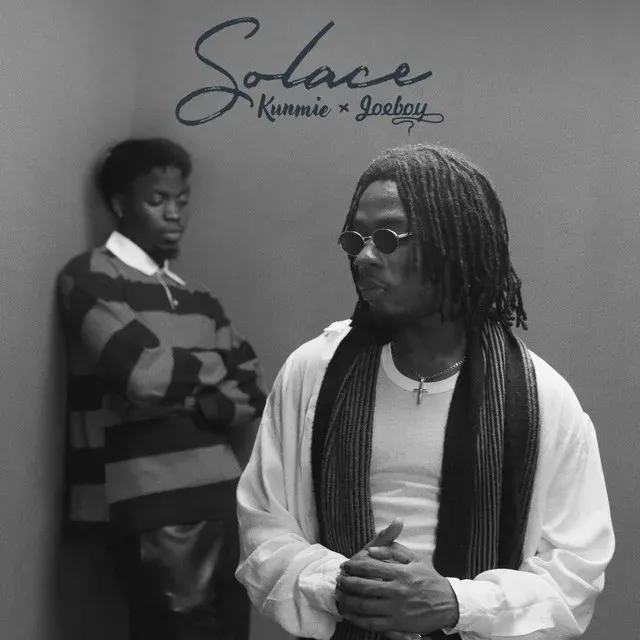 Kunmie – Solace II Ft. Joeboy
-
 REMA – Almighty God
-
 Arok Hill – Banye ft. ODUMODUBLVCK
-
 Burna Boy – For Everybody
-
 Sade Blaq – Fortune ft. Barry Jhay
-
 Fiokee – Iz Hawt 2.0 Ft Spyro & Jmani
-
 Choke Boi – Bend Am Ft. Ruger & Fido
-
 Dotman – Choko Milo
-
 Dremo – Man2Man
-
 Sean Tizzle – HUSBAND AND WIFE
-
 MIGHTY ST’ – TEMPER
-
 Mhajik – Relationship
-
 Brymo – Ìkóríra
-
Brymo – Òṣìkà
-
Brymo – Ìyá Àwẹ̀lé
-
Brymo – Ọmọ Mí Òwón
-
Brymo – Òkìkí
-
Brymo – Àródan Ft Miraj
Do you find Music and Gist Hub useful? Click here to give us five stars rating!