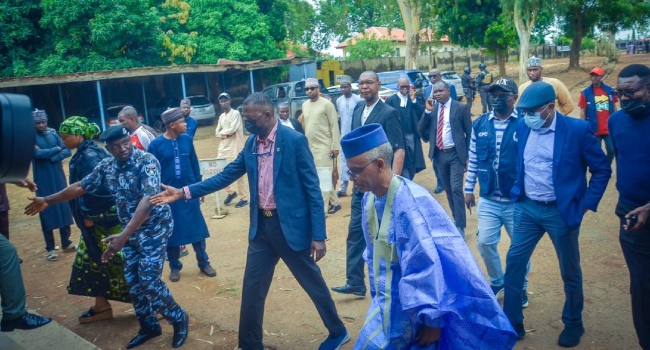
Do you pay tax? Yet you want world-class health care” – Reno Omokri addresses Nigerians who blame government for every tragedy
Comment


Reno Omokri, the former presidential aide and vocal social media commentator, recently sparked a heated national debate by challenging the “entitlement mentality” he perceives among Nigerians. His core argument centers on a blunt economic reality: the disconnect between tax contributions and the demand for premium public
Omokri’s comments come at a time when many Nigerians are increasingly frustrated with the government over infrastructure failures and a struggling healthcare system.
The Core Argument: No Tax, No ServiceOmokri’s stance is built on the principle of social contract. He suggests that citizens who do not contribute to the national treasury lack the moral or economic standing to demand “world-class” amenities.The Funding Gap: He argues that the Nigerian government cannot magically produce high-quality healthcare without a robust tax base.The Comparison: Omokri often compares Nigeria to Western nations, noting that citizens in Europe and North America pay significant portions of their income in taxes to fund the systems Nigerians admire.Accountability: He posits that when people don’t pay taxes, they lose a layer of “ownership” that would otherwise allow them to hold the government accountable for every kobo spent.
As expected, the reaction has been polarized. Supporters of Omokri’s view believe Nigerians need a “wake-up call” regarding how economies actually function. They argue that a country of over 200 million cannot survive solely on dwindling oil revenues.However, critics point out that the informal sector makes up a massive chunk of Nigeria’s economy. While these individuals might not pay formal income tax, they pay numerous indirect taxes (VAT, levies, and tolls). Furthermore, critics argue that demanding taxes from a population living under record inflation and unemployment is tone-deaf. The Bottom LineReno Omokri is essentially holding up a mirror to the nation, asking: “If we want a first-world country, are we willing to pay the first-world price?” While his delivery is often provocative, it forces a conversation about the sustainability of Nigeria’s current economic model and the responsibilities of the governed versus the governors.


Latest Post!!!
-
 Black Sherif – Frontline
-
 Mavo – Find My Babe
-
 Zoro Swagbag – Big Shot
-
Black Sherif – Expresso
-
 Yung Miami – Spend Dat (International Remix) Ft. Davido, Shenseea x Vybz Kartel
-
 ID Cabasa – Sojourner Ft. Kayefi
-
ID Cabasa – Para Ft. T-Classic
-
 Zinoleesky – Dantata
-
 Guchi – Call Me
-
 Victor AD – Heal Me (Time)
-
 Odumodublvck – Isale Eko
-
 Ayra Starr – Dance
-
Ayra Starr – Misunderstood
-
Ayra Starr – Ms. Paper Ft Theodora
-
Ayra Starr – Amazing Ft Kwn
-
Ayra Starr – Dangerous
-
Ayra Starr – Amazing Ft Kwn
-
Ayra Starr – Treasure
-
Ayra Starr – Hot Body (Remix) Ft Danny Ocean
-
Ayra Starr – Midnight in New York
Do you find Music and Gist Hub useful? Click here to give us five stars rating!